
What Architects Think About Downtown Dallas in 2026
Dallas architects are divided over City Hall's future as the city weighs adaptive reuse and civic core redevelopment amid 35% downtown office vacancy.
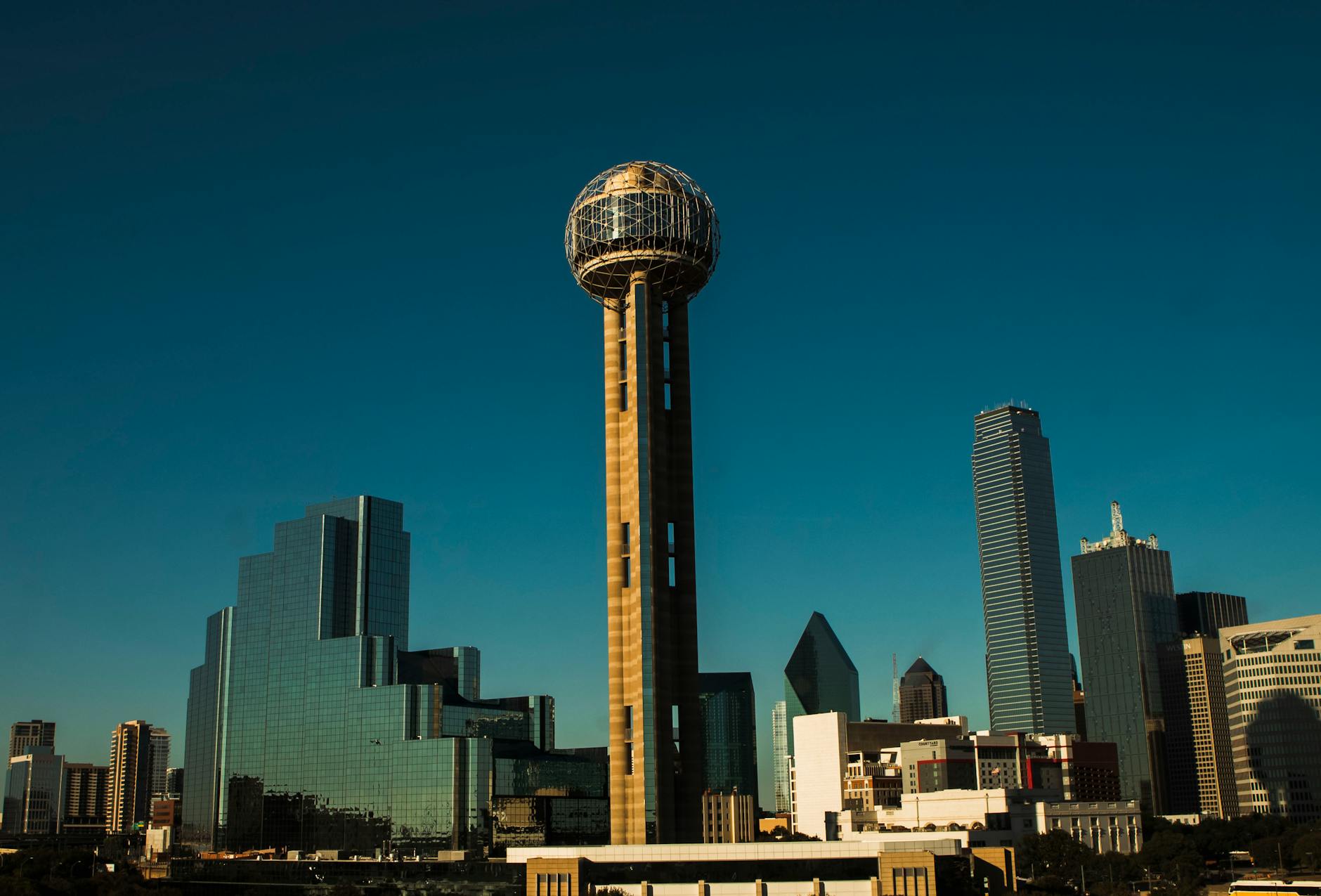
Office vacancy in Downtown Dallas has climbed to 35 percent, and the city’s own front door is part of the problem.
Dallas opened City Hall in 1978. I.M. Pei designed it. The building’s inverted pyramid sits at the southern edge of the civic core, concrete and angular, unmistakable, and depending on who’s talking, either a civic treasure or a development obstacle blocking some of the most expensive underused land in North Texas.
The city’s public input process on adaptive reuse of the site is now open, and architects don’t agree on what should happen next. That’s worth paying attention to. These aren’t dinner-party opinions. They’re opinions from people who get paid to figure out what buildings can become.
Some want to protect it. Their argument isn’t sentimental, exactly. Pei’s completed body of work is fixed now. Dallas has one of those buildings, and demolishing it in 2026 would put the city in the same category as decisions it’s still apologizing for, letting the original Majestic Theatre interior go, watching the downtown Neiman Marcus flagship decay. You don’t get those back.
Others look at the same structure and see an anchor on a neighborhood that’s already struggling. Commercial real estate data tracked by the Dallas Regional Chamber puts downtown office vacancy at 35 percent. That’s not a soft market. That’s a structural problem, and the plaza and surface lots surrounding City Hall represent some of the costliest dead space in the region. Adaptive reuse is the term everyone reaches for, converting rather than demolishing, but it’s got to pencil out, and it requires an operator willing to wager on foot traffic that doesn’t yet exist at any real scale downtown.
D Magazine surveyed architects on exactly this question, and the results track toward mixed-use density as the practical path. Residential units. Retail. Green space woven into the civic campus. Revenue-generating rather than revenue-consuming. Several architects pointed to that combination as the only conversion model that makes long-term sense for Downtown Dallas.
“Downtown needs residents, not just workers,” one architect told D Magazine. “You can’t activate a street with office buildings alone.”
Plenty of people in Preston Hollow might reasonably ask why this is their problem. It is. When downtown functions as a real economic engine, the tax base it generates takes pressure off residential property owners throughout the city’s northern precincts. That math isn’t subtle. A stronger downtown means Dallas isn’t leaning as hard on North Dallas homeowners to close budget gaps at Dallas City Hall, wherever that building ends up being.
Downtown Dallas Inc. has spent years pushing activation strategies for the area. The architectural conversation happening now is a different layer, a more permanent one. Skin-deep programming doesn’t fix a 35 percent vacancy rate. It doesn’t fix a civic campus built around a 1978 conception of how government and public space should relate to each other, a conception that assumed workers would commute in and leave, rather than residents who’d stay, spend money, and generate tax revenue year-round.
The political complexity here can’t be waved away. City Hall isn’t a warehouse that sat empty. It’s where Dallas conducts its business. Any conversion or relocation requires a replacement facility, a capital plan, and a city council willing to move on it. That’s not a small ask. Some council members will want preservation on principle. Others will want redevelopment dollars. The two positions aren’t always incompatible, but getting from here to a shovel in the ground takes the kind of sustained political will that Dallas doesn’t have an unblemished record of producing.
What the architects surveyed by D Magazine seem to agree on, across their disagreements, is that leaving the status quo in place isn’t neutral. It’s a choice. And it’s a choice with a cost that shows up in property tax bills and economic stagnation across the whole city, including the 50 or so square miles that make up North Dallas.