
Dallas Community Land Trust Targets South and West Dallas
Dallas Community Land Trust opened its first homes in South Dallas, offering permanently affordable homeownership by separating land and housing costs.
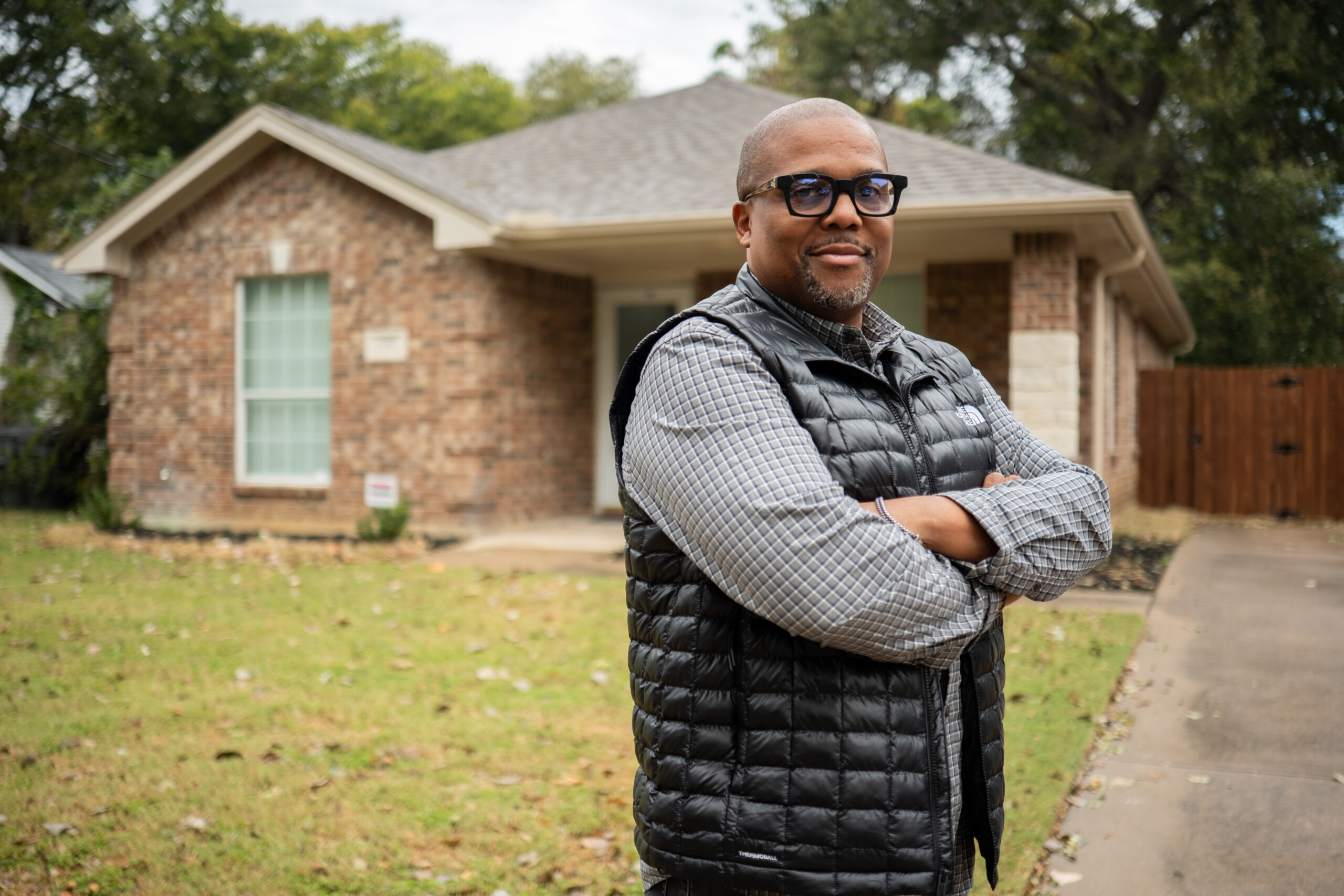
The Dallas Community Land Trust opened its first homes to potential buyers on Nov. 1, 2025, showcasing two properties in South Dallas neighborhoods that its founders say will stay affordable permanently.
The organization held an open house in the Bertrand and Dolphin Heights neighborhoods, with both homes expected to be available for purchase before the end of last year. Ossie Kendrix, who started as executive director in April 2025, has been the public face of a concept that’s been years in the making and is now squarely aimed at the parts of Dallas feeling the sharpest edge of rising property values.
The trust took shape in 2022 and formalized its board in 2024, bringing together seven founding organizations: The Real Estate Council Community Investors, Builders of Hope, Frazier Revitalization, Southfair CDC, Innercity Community Development Corporation, Cornerstone Community Development Corporation and the Communities Foundation of Texas. That’s a serious coalition. It spans development, philanthropy and community organizing in a way that signals this isn’t a short-term pilot program.
The mechanics of a community land trust aren’t complicated, but they’re worth understanding. The nonprofit owns the land. The buyer purchases only the house, then leases the land back through a long-term, renewable ground lease at a small monthly fee, typically $25 to $40 per month. By stripping land costs out of the purchase price, the model reduces both the upfront price and the ongoing property tax burden. When the owner eventually sells, a resale formula keeps the price affordable for the next buyer too. The affordability doesn’t expire after one transaction.
Eligibility targets households earning between 50% and 80% of the area median income, which HUD sets annually. Kendrix has been pointed about who that covers. “That includes people like teachers, city employees and other essential workers who keep our city running,” he told Dallas Free Press. It’s a deliberately unglamorous constituency. These aren’t buyers who can’t manage money. They’re buyers who can’t manage the gap between wages and the market.
That gap has widened everywhere, but South and West Dallas have felt it in a particular way. Longtime residents in neighborhoods like Bertrand watched property values climb without corresponding income growth, and watched their tax bills follow. The DCLT’s model is designed specifically to interrupt that cycle before residents get priced out of blocks their families have occupied for generations.
There are over 300 community land trusts operating across the United States, according to Grounded Solutions Network, a national nonprofit that supports CLT development. The model has deep roots in the civil rights movement and has been deployed in cities from Burlington, Vermont, to Atlanta to New York. Dallas is relatively late to the table, which makes the DCLT’s formation more notable, not less.
North Dallas and Preston Hollow residents don’t face the same displacement pressures, but the economic stability of working-class neighborhoods throughout the city has real downstream effects on the regional economy, including property tax bases, school district enrollment and the labor pool that keeps construction, healthcare and hospitality running. This isn’t a charity project disconnected from the concerns of the northern half of the city.
Kendrix said the trust’s leadership team came on board in early 2025, giving the organization just a few months to get from staffed to open house. That’s an aggressive timeline for any nonprofit, let alone one introducing a property ownership model that most Dallas buyers have never encountered. Community education will be as much a part of the work as home sales.
The DCLT hasn’t announced a total number of homes it plans to bring to market or a specific dollar figure for its initial capitalization, but the Nov. 1 open house put two tangible addresses behind what has been, until now, a governance structure and a mission statement. Bertrand and Dolphin Heights are on the map. The organization’s job now is to keep adding names to that list.